
The Azores is comprised of a group of nine volcanic islands situated along the mid-Atlantic ocean ridge halfway between North America and Europe. Portugal to which these islands belong is a 2.5 hour flight or 1,500 km to the east.
The island of Pico is considered one of the most beautiful of the Azorean islands. Pico is located right on the edge where the African continental plate drifts away from the American plate and is dominated by an old volcano of the same name. Mount Pico rises up steeply from the sea to a towering height of 2,351 m making it the highest mountain of Portugal. Only 5 km off the coast, however, the ocean floor drops to a depth of 1600 m.
Pico is a green island with a dazzling variety of colours. February is the month for picking oranges fresh from the trees. In July, walls of blue and white Hydrangeas line the roads. In August wild ginger lilies dominate the landscape with their yellow glow and sweet smell. Tasty grapes for Pico’s famous red and white wines are harvested in August and September. The island’s climate is warm-temperate, often humid. The summer maximum is around 30°C, and even in winter, temperatures seldom sink below 15°C.
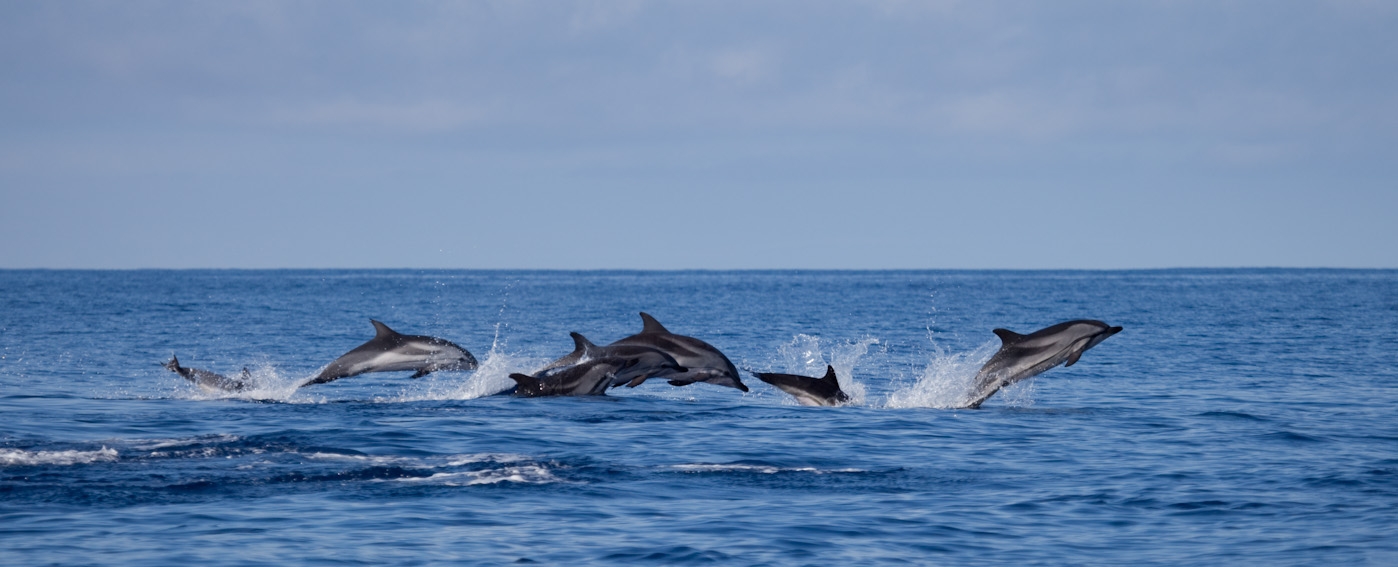
A journey to Pico is a journey into the past. Life on Pico has its own slower rhythm. The tranquillity and relaxation of the people combined with spectacular nature and beautiful landscapes make it ideal for a secluded vacation. There is also plenty of opportunity for people who prefer active and adventurous holidays. Activities on Pico include diving, snorkelling, hiking and whale watching.
Diving in the Azores is best during the months of May to October but you can actually dive all year round. Visibility around the islands is outstanding, and the water temperature a pleasant 22 -23 Celsius making the diving even more of a once-in-a-lifetime experience. Pico’s conditions and probability are so good here that we will actually guarantee an encounter with the big Atlantic fish and the lava formations under water, which resulted from volcanic flow in the past. Divers will frequently see grouper, mackerel, barracudas, skipjack tuna, trigger fish and common stingray, which can grow to enormous sizes in these waters even large mantas are sometimes encountered. Small sea creatures such as sea spiders, sea urchins, tubeworm, octopus, moray eels and lobsters hide in the small underwater formations. Night dives are particularly spectacular since the luminescent plankton can provide an eerie glow at certain times of the year. Shrimp in huge swarms provide rainbow colours, nudibranchs and anemones provide colours as well. Around the island of Pico, there are over 35 dive spots with caves and grottos as well as walls, flats and seamounts close to the island. The tremendous variety of species within a very short distance is a divers dream. Diving in the Azores is a great way to swim with turtles and diving birds, to find black and soft coral and scores of other beautiful species.
Getting to the Azores
Useful Information
From the UK
Flight connections from the UK are excellent and there are lots of options to consider :
Gatwick direct flight - SATA Air Azores operates a direct flight from Gatwick to São Miguel every Saturday from April to October. The flight takes 3½ hours and costs around £340 per person including taxes. Also direct from Stansted with Ryanair from around £65.00 each way this may seem cheap but remember you pay for baggage and as a diver you may have 2. Onward connection to Pico is with SATA Air Azores with is around £70.00 each way.
Manchester and Heathrow flights - TAP Air Portugal operate flights from Manchester and Heathrow to Lisbon and then onward flights to the Azores. Each leg takes around 2½ hours and prices range from £250 upwards depending on availability. These flights usually have a long stopover in Lisbon giving you enough time to explore some of Portugal's capital city.
Budget airlines - if you are looking to fly from another regional airport in the UK, you may want to consider flying with a budget airline to Lisbon and then onwards to the Azores with TAP or SATA. The only thing to bear in mind when doing this is that you are effectively on 2 separate tickets so we always allow at least 3 hours connection in Lisbon in case of delays.
From Lisbon
There are daily flights from Lisbon with TAP Air Portugal and SATA Air Azores to the islands of São Miguel, Faial,Terceira and Pico with connections from many major cities around the world.
From Europe
SATA, Air Azores, Ryanair, TUI and TAP operate flights to the Azores from Amsterdam, Stockholm, Barcelona, Billund, Copenhagen, Dublin, Frankfurt, Las Palmas, Madrid, Munich, Paris, Oslo, Zurich, Faro, Porto, Funchal and Porto Santo.
We are very happy to help you with flight option please feel free to ask us info@divetheazores.com
DIVE THE AZORES
info@divetheazores.co.uk




don't just dive it,explore it.








Airlines that fly to the Azores
